EV Regenerative Braking Explained: How Energy Recovery Works
Entering 2026, China’s new energy vehicle industry continues to develop rapidly, with various new technologies becoming increasingly mature. Consumers are beginning to pay more attention to which electric vehicle technologies provide truly practical benefits. Among them, the Regenerative Braking System has become one of the most important technologies in modern electric vehicles.
Many EV users notice that when they release the accelerator pedal, the vehicle begins to slow down noticeably, while the dashboard may display an energy recovery status. This phenomenon is not traditional engine braking, but rather a process where the electric motor converts the kinetic energy generated during vehicle movement back into electrical energy and stores it in the power battery.
This technology not only improves the energy efficiency of electric vehicles but also changes the driving experience, affecting vehicle range, battery management, and overall driving comfort.
What Is Regenerative Braking in Electric Vehicles?
In traditional gasoline vehicles, when the vehicle slows down or brakes, the kinetic energy of the vehicle is usually converted into heat through friction between the brake pads and brake discs, and this energy is then lost into the surrounding environment.
For example, when a vehicle traveling at high speed applies the brakes, most of the energy generated by its movement is ultimately wasted as heat.
However, electric vehicles use a completely different energy management approach.
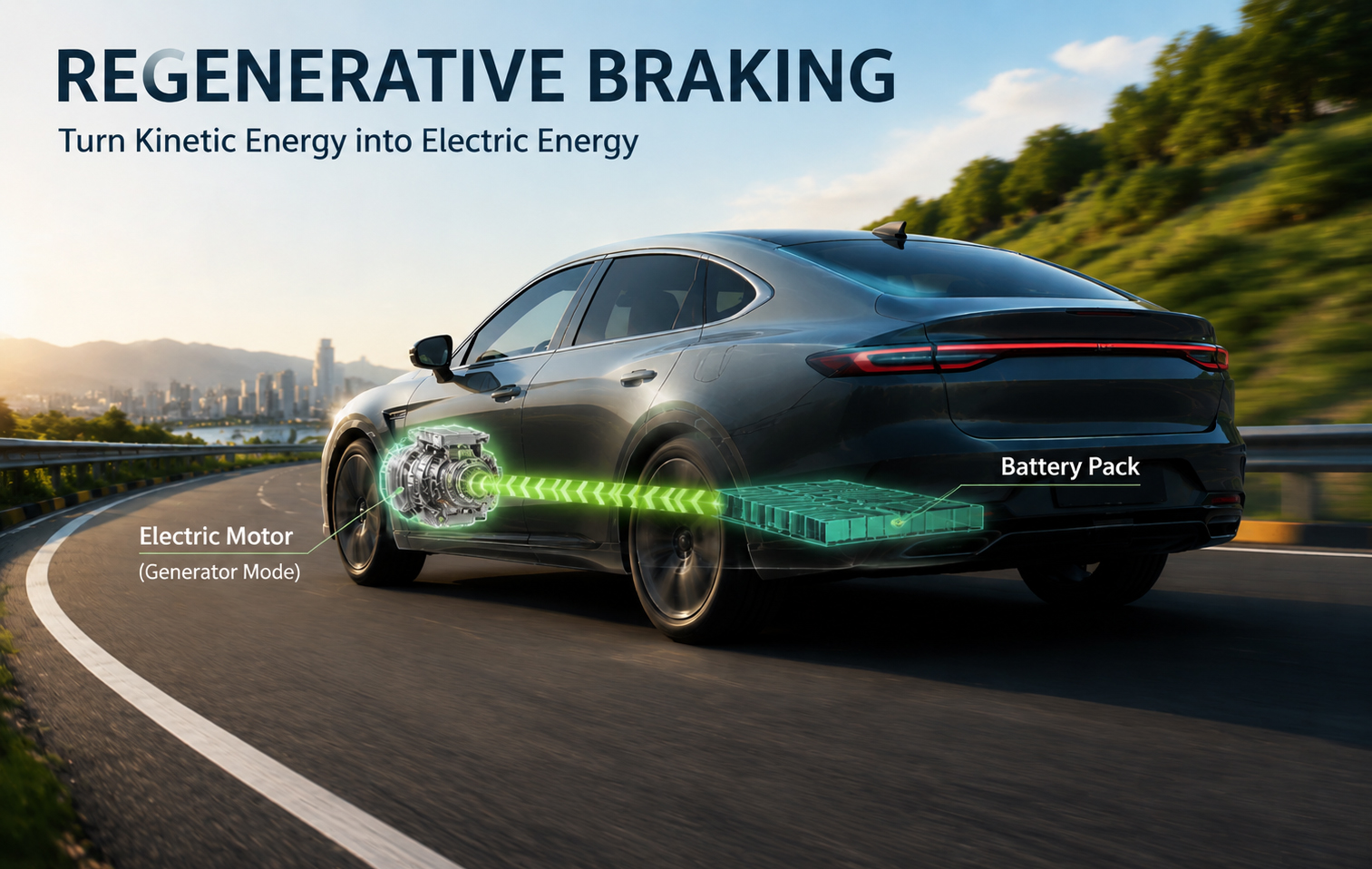
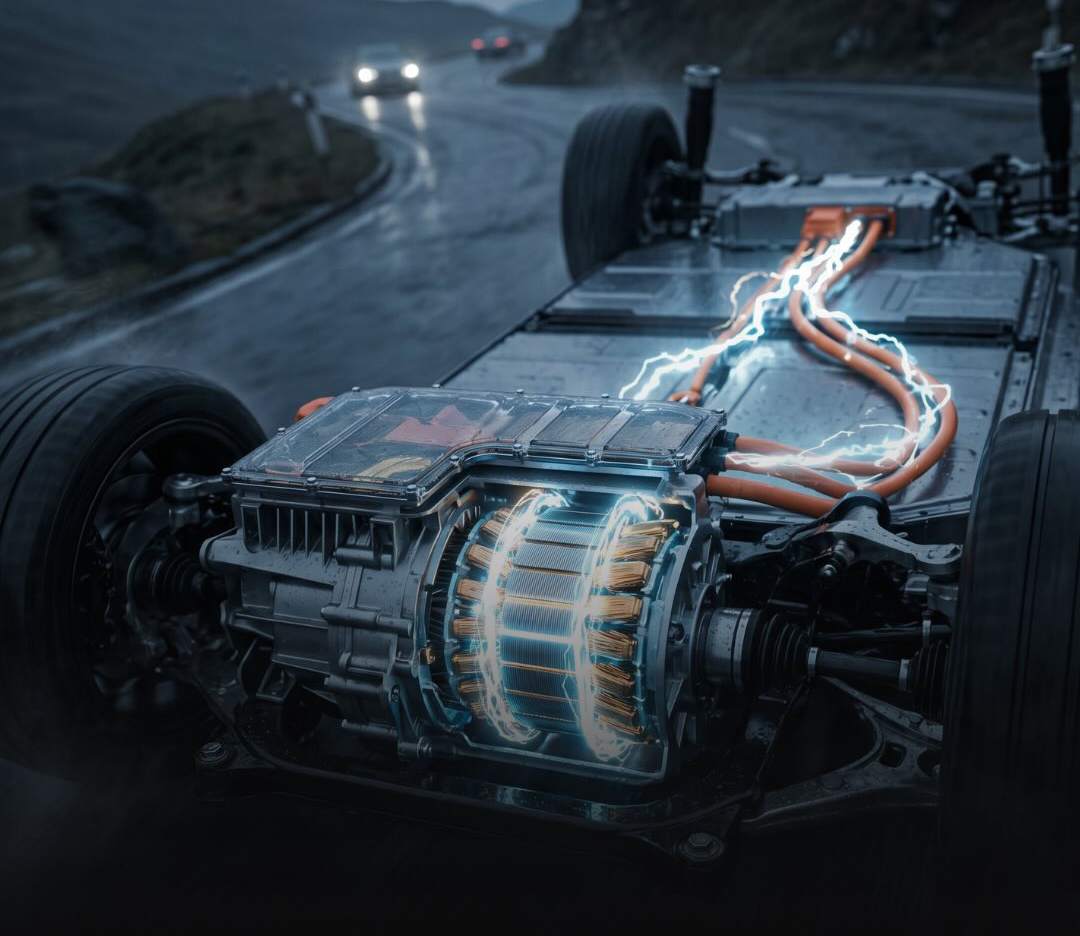
The regenerative braking system allows the drive motor to operate in reverse during deceleration, changing from an “electric motor” into a “generator.” The mechanical energy generated during vehicle slowdown is converted into electrical energy through the motor and stored in the power battery, where it can be reused during future driving.
Simply put:
Traditional vehicles:
Vehicle deceleration → Kinetic energy converted into heat → Energy wasted
Electric vehicles:
Vehicle deceleration → Motor recovers kinetic energy → Converted into electrical energy → Stored in battery
This is one of the key reasons why electric vehicles achieve higher energy efficiency compared with traditional gasoline vehicles. According to data from the U.S. Department of Energy, typical electric vehicles achieve significantly higher overall energy efficiency than conventional gasoline vehicles when regenerative braking is taken into account.
How Does EV Regenerative Braking Work?
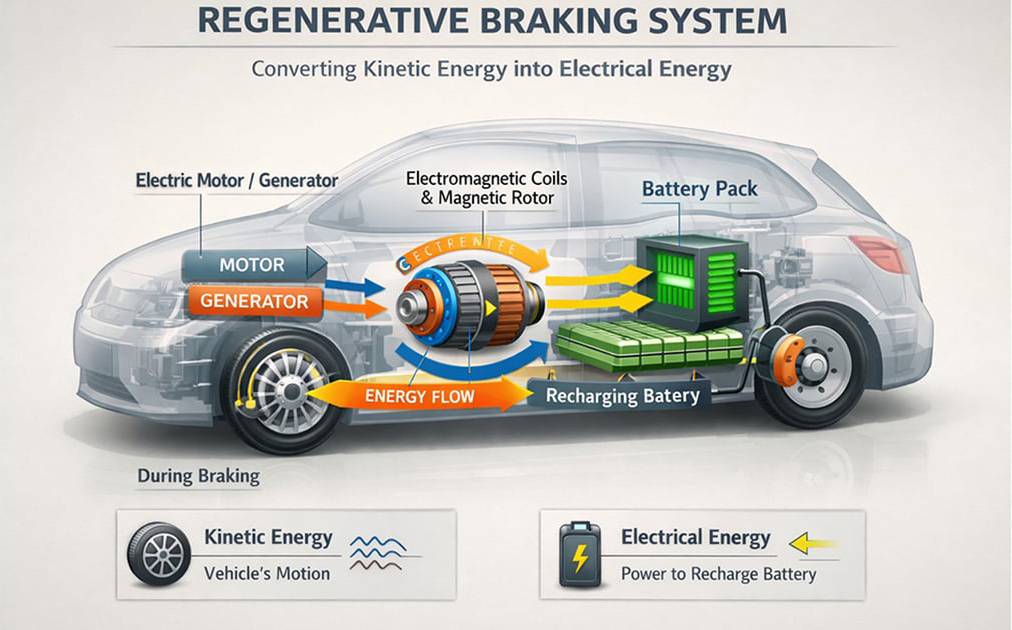
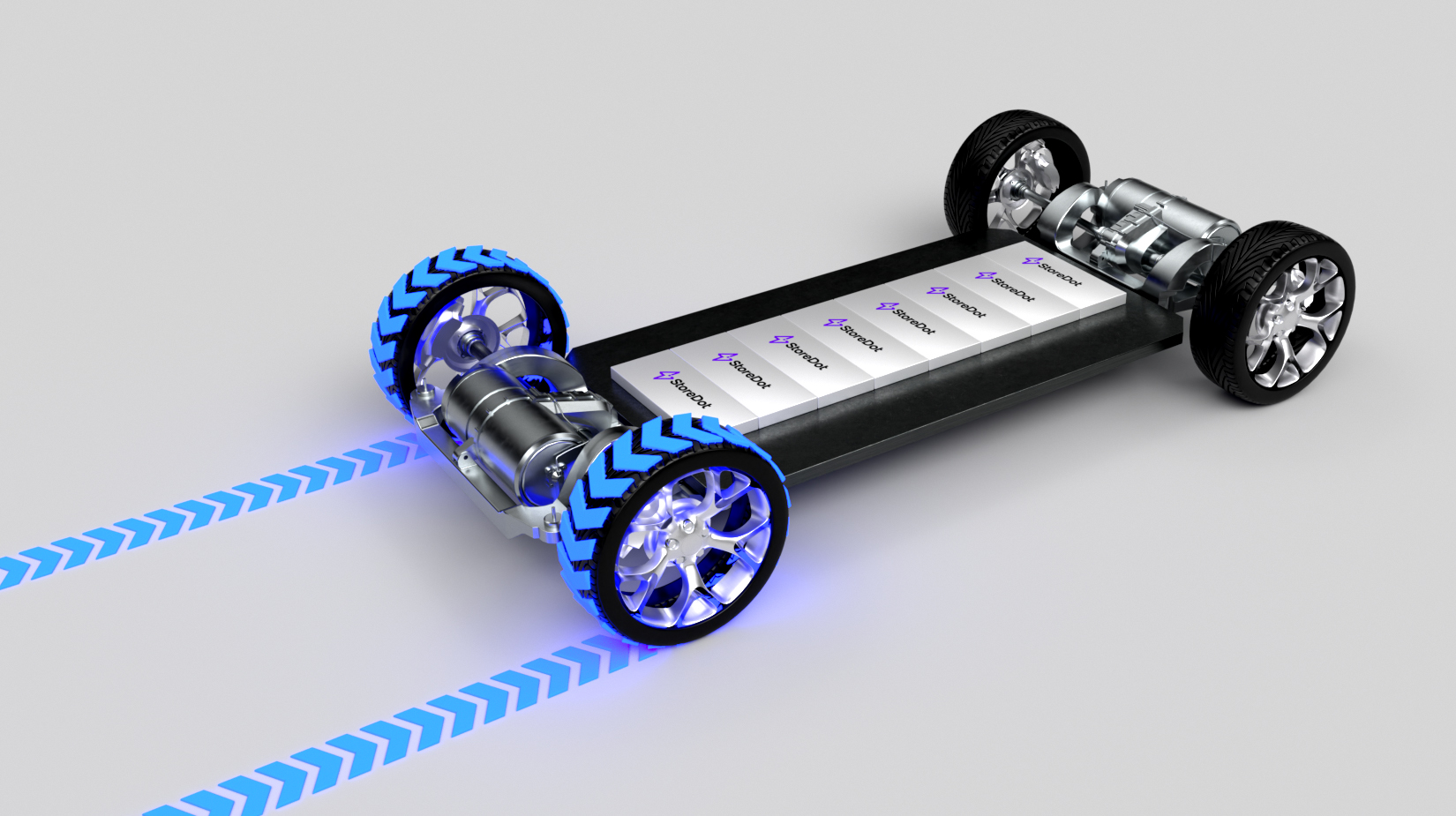
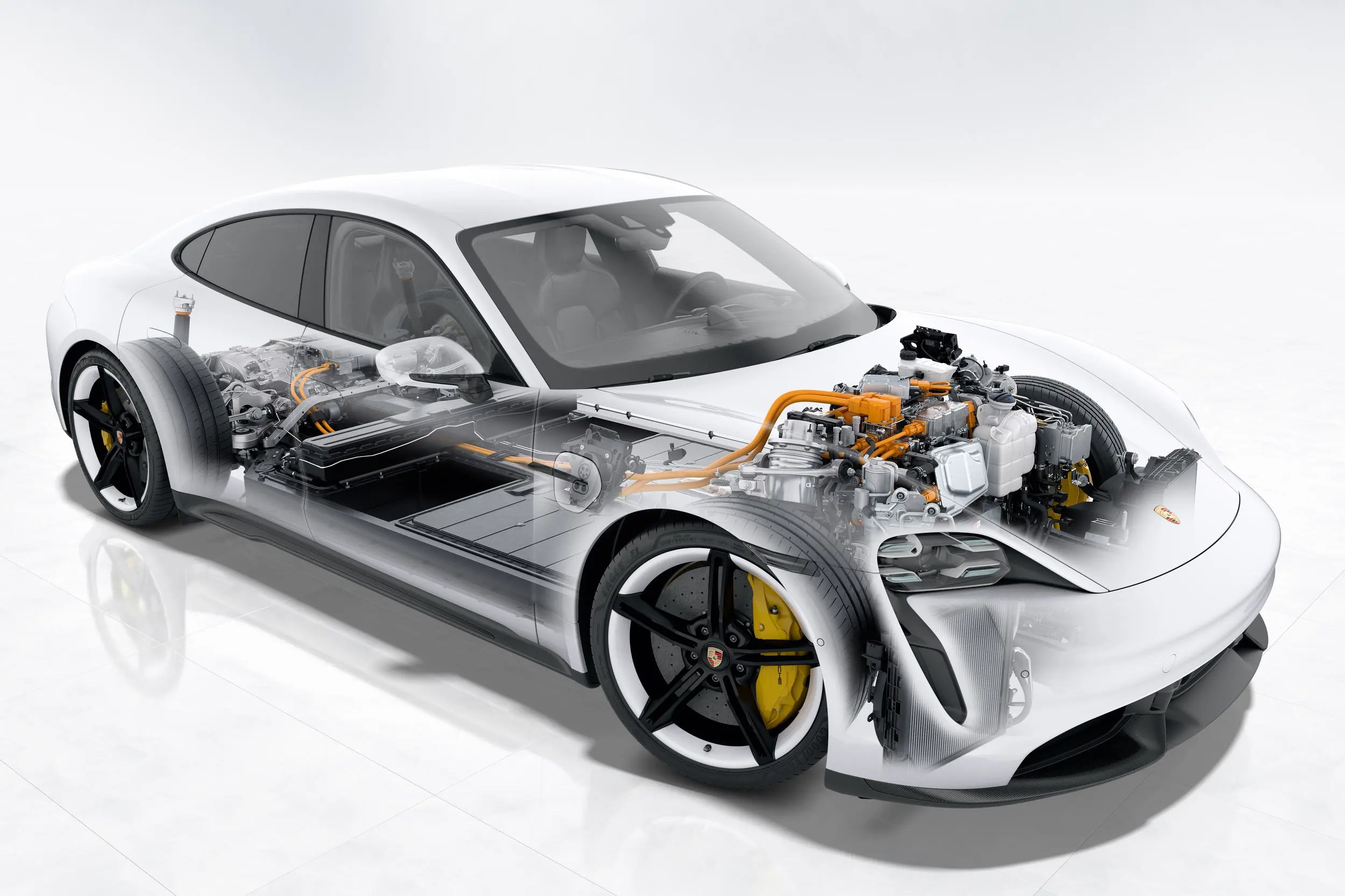
The regenerative braking system in electric vehicles mainly relies on three core components working together:
- Electric motor;
- Electronic control system;
- Power battery.
During normal driving:
Power battery outputs electricity → Motor operates → Wheels are driven → Vehicle moves forward
When the driver releases the accelerator pedal or presses the brake pedal:
Wheels rotate → Motor is driven by the wheels → Motor enters generator mode → Electricity is recovered and stored in the battery
During this process, the vehicle control system automatically adjusts the level of energy recovery according to:
- Current vehicle speed;
- Remaining battery capacity;
- Battery temperature;
- Driving mode;
- Braking requirements.
For example, in urban driving conditions where vehicles frequently accelerate and decelerate, regenerative braking can provide more noticeable benefits. However, during stable highway cruising, recovery efficiency is relatively limited because there are fewer deceleration events.
Why Are Electric Vehicles Especially Suitable for Regenerative Braking?
Electric vehicles use electric motors for propulsion, which gives them a natural advantage compared with gasoline engines.
Gasoline engines generate power mainly through fuel combustion, but they cannot effectively recover the vehicle’s kinetic energy during deceleration.
Electric motors, however, have a bidirectional energy conversion capability:
- When consuming electricity, the motor provides driving power;
- When recovering energy, the motor functions as a generator.
This characteristic allows electric vehicles to make better use of energy during operation.
Regenerative braking is especially effective in the following situations:
Urban Traffic Conditions
City driving usually involves frequent braking and acceleration, making it one of the most suitable environments for regenerative braking.
Examples include:
- Stopping at traffic lights;
- Following other vehicles in urban traffic;
- Driving at low speeds.
Every time the vehicle slows down, a certain amount of energy can potentially be recovered.
Long Downhill Roads
On mountain roads or long downhill sections, electric vehicles can continuously use regenerative braking to reduce speed while reducing the pressure on traditional braking systems.
Three Common Questions Consumers Have About Regenerative Braking
1. Can Regenerative Braking Increase EV Driving Range?
The answer is yes, but it does not “create unlimited range.”
The main purpose of regenerative braking is to reduce energy waste during vehicle operation.
Without regenerative braking, the energy generated during deceleration would be directly converted into heat and lost. However, the actual recovery rate varies depending on the vehicle model, battery condition, and driving environment.
It is important to note:
- The effect is limited during high-speed cruising;
- Aggressive driving cannot recover all consumed energy;
- The energy recovery process itself also has energy losses.
Therefore, regenerative braking is primarily an efficiency improvement technology, rather than a way of generating additional energy.
2. Does Regenerative Braking Affect EV Battery Life?
Many consumers have concerns:
“Will frequent charging and discharging reduce the lifespan of the power battery?”
Under normal operating conditions, regenerative braking does not significantly reduce battery life.
This is because the Battery Management System (BMS) in electric vehicles controls:
- Charging speed;
- Current intensity;
- Battery temperature;
- Maximum charging status.
The vehicle will not continuously input energy into the battery without limits.
In addition, because regenerative braking reduces the amount of electricity consumed from the battery, the vehicle may experience fewer deep discharge cycles under the same driving range requirements. This can actually have a positive impact on long-term battery usage.
However, the system will usually reduce or limit regenerative braking under certain conditions:
- The battery is close to fully charged;
- The battery temperature is too low;
- The battery temperature is too high.
3. How Does Regenerative Braking Affect Driving Experience?
Besides improving efficiency, regenerative braking also changes the way electric vehicles are driven.
One-Pedal Driving Experience
Many electric vehicles offer One-Pedal Driving mode.
The driver mainly controls the accelerator pedal:
- Press → Accelerate;
- Release → Decelerate.
After becoming familiar with this driving style, drivers can reduce the use of the brake pedal, especially in urban commuting environments.
Because electric vehicles do not have traditional transmission shifting processes, regenerative braking combined with electric drive systems allows smoother acceleration and deceleration.
For family SUVs and premium electric vehicles, this smooth driving experience can significantly improve passenger comfort.
Different Users Need Time to Adapt
However, it must be acknowledged that some new EV drivers may feel:
“When I release the accelerator, the vehicle slows down too strongly.”
This strong deceleration feeling may cause discomfort or even motion sickness for some passengers.
Therefore, most modern electric vehicles provide different regenerative braking settings, including:
- Strong recovery mode;
- Standard recovery mode;
- Weak recovery mode.
Drivers can adjust the setting according to their personal preference.

Conclusion
The regenerative braking system is one of the key technologies that distinguishes electric vehicles from traditional gasoline vehicles.
By reversing the operation of the electric motor and generating electricity during deceleration, regenerative braking converts otherwise wasted kinetic energy into usable electrical energy, improving energy efficiency while reducing wear on traditional braking systems.
Although regenerative braking cannot provide unlimited range and cannot completely replace charging, it can effectively reduce daily driving energy consumption and improve the overall driving experience.
As electric vehicle technology continues to develop, regenerative braking will work together with intelligent driving systems, high-voltage fast charging platforms, and advanced battery technologies to become one of the core technologies in future EV energy management systems.
For global electric vehicle consumers, understanding how regenerative braking works can help them better experience and use modern intelligent electric vehicles.
Please explore our blog for the latest news and offers from the Chinese automotive market.