Long-Distance Driving Comfort: How Lumbar Support & Seat Adjustment Reduce Fatigue
Long-distance driving fatigue often begins in the lower back and hips. Maintaining a fixed sitting posture for hours can cause muscle stiffness, reduce blood circulation, and even increase the risk of lumbar disc issues. Automakers are optimizing lumbar support and seat adjustment systems to address this challenge from an ergonomic perspective.
This article breaks down two key comfort features—lumbar support and seat adjustability—and explains how they work individually and together to alleviate fatigue during long trips.
🔹 1. Lumbar Support: From Passive Cushioning to Active Adaptive Support
The core purpose of lumbar support is to fill the gap between the spine and the seat, reducing pressure on the lumbar vertebrae. While traditional seats used fixed supports, modern vehicles now offer electric adjustments and air-cushion systems that dynamically adapt to body shape.
1. Fixed Lumbar Support: Basic but Limited
Early vehicles used a hard plastic plate or foam block inside the seatback. The support was fixed in position and stiffness, making it unfriendly to drivers of different heights and body shapes.
Some drivers report lower-back soreness after only two hours due to misalignment between the fixed support and their natural lumbar curve.
2. Electrically Adjustable Lumbar Support: Precise Curve Matching
Electric lumbar support uses motors to move the support panel up, down, forward, or backward. Studies show that supporting the L3–L5 region (about 10–15 cm above the hips) best relieves spinal pressure.
In vehicles equipped with 4-way lumbar adjustment, drivers can position the support exactly where their spine needs it. Tests indicate up to 40% reduction in fatigue after four hours of driving compared with fixed supports.
3. Air-Cushion Lumbar Support: Soft Adaption Meets Strong Support
Air-cushion systems adjust firmness by inflating or deflating internal airbags. Some premium models link the airbags to pressure sensors in the seat:
Lean forward → airbag slightly deflates
Lean back → airbag inflates to fill the space
This “active adaptation” reduces lumbar muscle activity by 25%, greatly lowering stiffness during long drives.
4. Side Bolster Support: Reducing Fatigue From Lateral Motion
Support isn’t just vertical—side bolsters help limit body sway. In some sporty models, adjustable air-filled bolsters automatically tighten during cornering, reducing lumbar torsion.
Tests show a 30% reduction in muscle load on winding mountain roads, with fatigue delayed by about 90 minutes.

🔹 2. Seat Adjustments: Multi-Dimensional Freedom for Better Posture
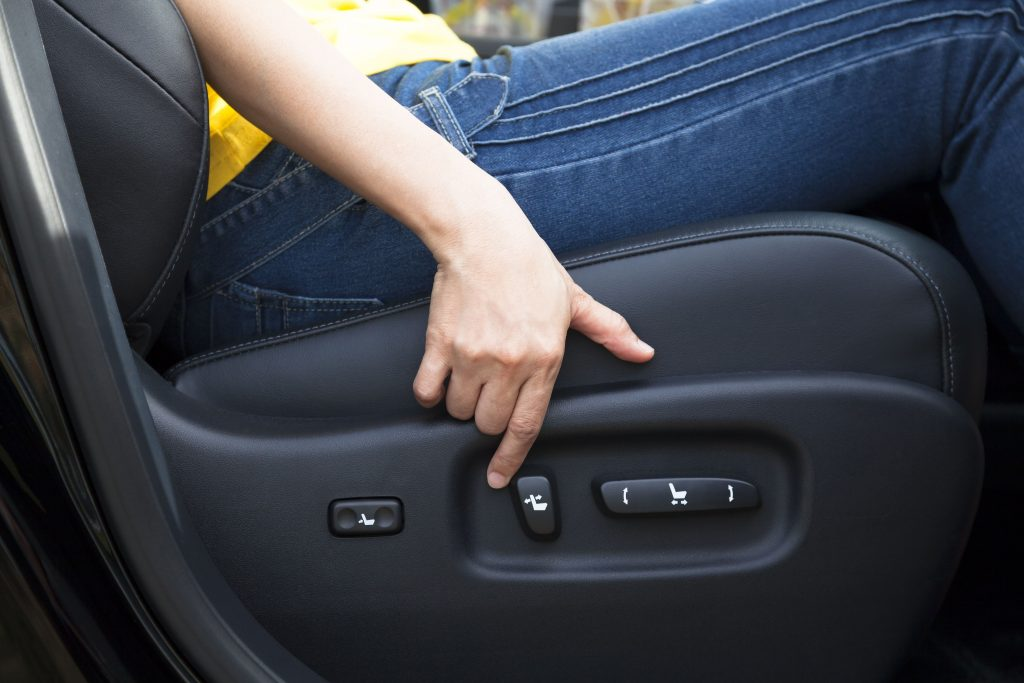
Seat adjustment determines whether the driver can find the most relaxed, ergonomic posture. From basic fore-aft movement to advanced leg rests and shoulder support, every adjustment helps distribute pressure more evenly.
1. Basic Adjustments: Fore-Aft & Backrest Angle
Fore-aft travel helps optimize the angle between thighs and torso. The ideal angle is 110–130°, which ensures balanced pressure on the hips and thighs.
Studies show:
Backrest angle of 25–30° minimizes lumbar stress
Too upright → more lumbar load
Too reclined → neck tension increases
2. Seat Cushion Adjustments: Length & Tilt
Cushion length affects thigh support:
Too short → thighs hang, reducing blood flow
Too long → pressure behind the knees
Cushion tilt (front high/back low or vice versa) further refines pressure distribution. A slightly rear-higher position reduces sliding and minimizes the need to readjust posture while driving.
3. Leg Rest Extension: A “Savior” for Long Trips
Leg rests support the lower legs and reduce fatigue in the thighs. Common in premium MPVs and SUVs, adjustable leg rests typically extend 10–15 cm and tilt 0–30°.
When the leg rest lifts the calves parallel to the ground, thigh muscle workload is minimized—ideal for resting during breaks.
4. Shoulder Support: A Bonus for Taller Drivers
Some vehicles feature a raised upper-back area to support the shoulders and prevent head-forward posture. When linked to the backrest, the shoulder support raises automatically as the seat reclines.
Tall drivers (180+ cm) show significant improvement: neck fatigue appears after four hours instead of two.
🔹 3. Synergy Between Lumbar Support and Seat Adjustment: Fatigue Relief Greater Than the Sum of Its Parts
Optimizing lumbar support alone or seat adjustment alone helps, but modern vehicles integrate both into intelligent ergonomic systems for maximum comfort.
1. Dynamic Support Modes: Auto-Adjusting to Driving Scenarios
Some models offer a “dynamic support mode”:
Straight driving → moderate firmness for comfort
Cornering or acceleration → firmer lumbar and side bolsters
Driver fatigue detected → seat massages + switches to a more relaxed posture
Tests show a 35% reduction in fatigue-related incidents during long journeys.
2. Seat Memory: One-Touch Personalized Posture
Drivers can store presets such as:
Driving mode: 25° backrest, firmer lumbar, slightly rear-high cushion
Rest mode: 40° backrest, softer lumbar, raised leg rest
A quick switch during breaks improves rest efficiency—10 minutes of rest feels like a 20-minute recovery without seat adjustment.
3. Material Layering: Soft–Hard Combination for Pressure Distribution
Modern seats often use multi-layer foam:
Soft top layer for comfort
High-density middle layer for support
Structural base layer for stability
Seats that pair firmer lumbar foam with softer side bolsters reduce lumbar pressure peaks by 28%, leading to more even weight distribution.
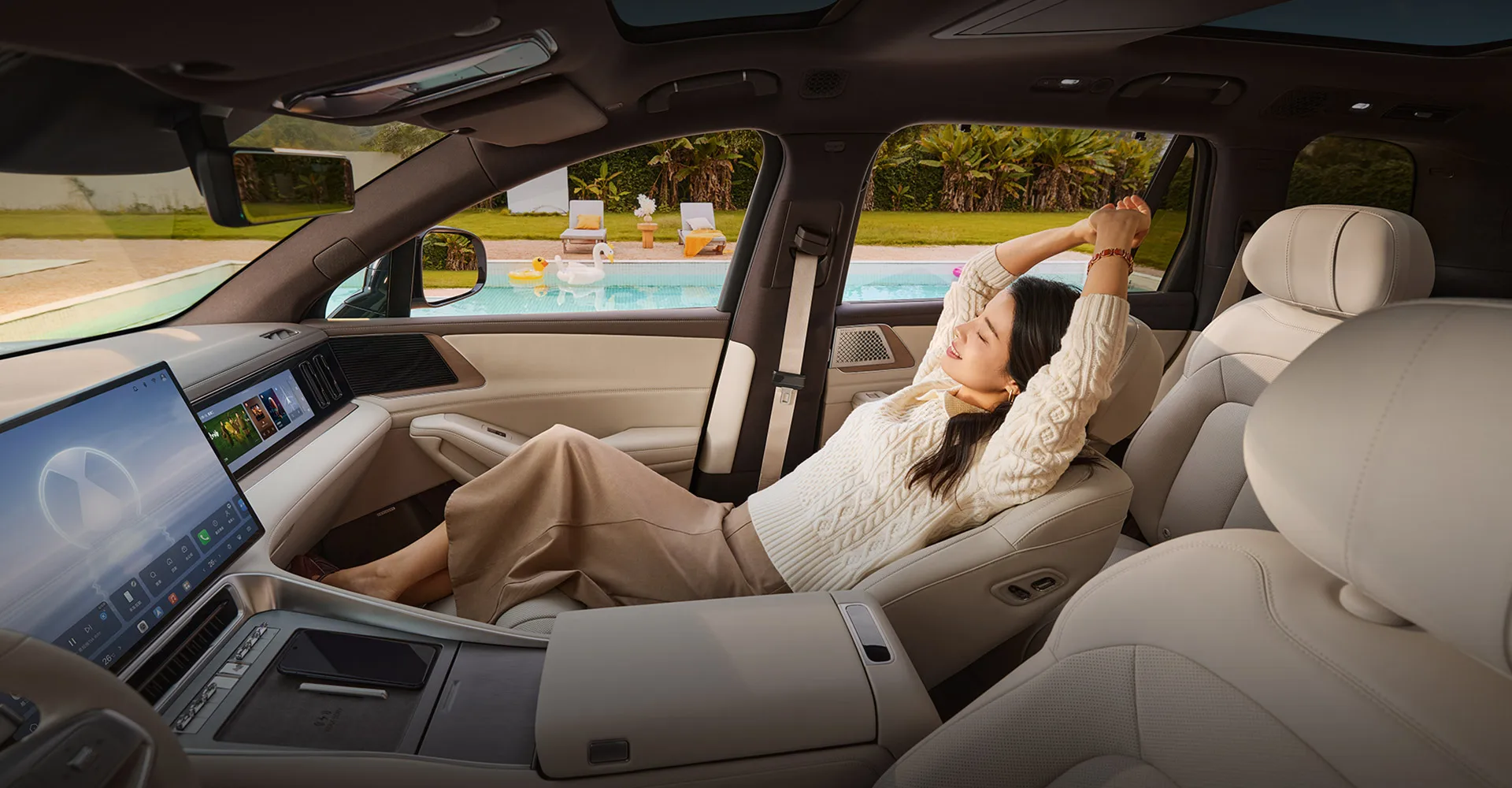
🔹 Conclusion: Comfort Engineering Makes Long Trips Truly Enjoyable
Relieving long-distance fatigue is a coordinated effort between ergonomics and modern technology. Precision lumbar support, multi-dimensional seat adjustments, and smart adaptive systems together form a comprehensive comfort solution. When choosing a vehicle, don’t overlook seat comfort features—they can determine whether a long journey feels exhausting or refreshing. A road trip without fatigue is the best reward for the miles you travel.
Please explore our blog for the latest news and offers from the EV market.